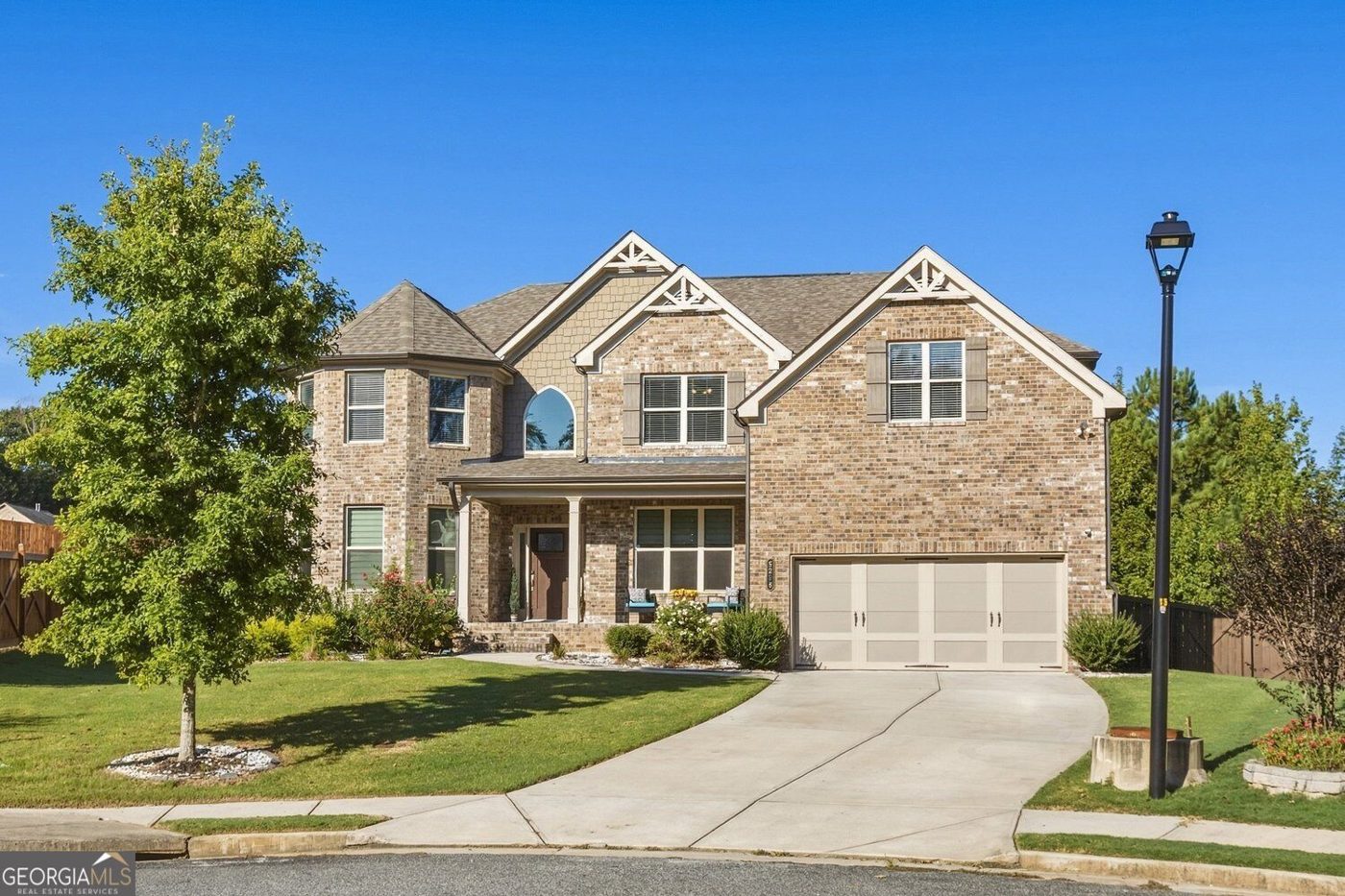
Fall is property tax season in metro Atlanta, and 2026 is not a normal year: Fulton County sent temporary bills, the state knocked a fixed amount off every homesteaded bill, and lawmakers passed a new property tax law. The next big deadline is in Gwinnett and Forsyth: Nov. 15, which falls on a Sunday this year.
When are 2026 property taxes due in Atlanta? Gwinnett and Forsyth: Sunday, Nov. 15, 2026 (pay online by Fri., Nov. 13). DeKalb second half: Monday, Nov. 16. Fulton and Cobb: Oct. 15 (passed; pay now to stop interest). Some city bills come later, for example Suwanee Dec. 20. Under Georgia law the default due date is Dec. 20, but each county may move it to Dec. 1 or Nov. 15 or split it into installments, so the date on your own bill is the one that counts.
Want the tax on a specific home? Try my Georgia property tax calculator: enter the price and pick the county, city and school district to see every levy, with the seller's current bill next to what you would pay after closing.
Send me your 2026 property tax bill and I'll check whether your homestead exemption was applied. If the exemption line shows 0, or the state's $18,000 relief line is missing, the application may not have gone through. Send a photo or screenshot (feel free to cover your name) to WeChat zion4realtor or leave me a message. I'll check it for free and tell you the date to file by for next year.
2026 due dates by county
| County | 2026 bills | Due |
|---|---|---|
| Gwinnett | mailed in September | Nov. 15 (Sunday) |
| Forsyth | mailed | Nov. 15 (Sunday) |
| DeKalb | mailed Aug. 14, two installments | 1st half Sept. 30 (passed); 2nd half Nov. 16 (Monday) |
| Fulton | mailed Aug. 15, temporary bills | Oct. 15 (passed); City of Atlanta portion Sept. 30 (passed) |
| Cobb | issued in August | Oct. 15 (passed) |
Dates come from each county tax commissioner's 2026 announcements. If you are in Fulton or Cobb and haven't paid, pay now: interest starts the day after the due date.
City taxes can be a second bill. In Gwinnett, only Berkeley Lake, Grayson and Peachtree Corners are billed together with the county; every other city mails its own bill with its own due date. According to the cities' websites, Suwanee (4.93 mills) is usually due Dec. 20, Snellville by Jan. 15 of the following year, and Loganville usually Nov. 15.
Because Nov. 15 is a Sunday, Gwinnett's rule that a postmark on or before the due date counts as on time helps, but the safest move is to pay online by Friday, Nov. 13. Gwinnett charges no fee for eChecks online (cards carry a fee), and new for 2026 it accepts partial payments as long as the bill is paid in full by the due date.
What paying late costs
Under Georgia law, unpaid taxes accrue interest from the day after the due date at 9.75% a year in 2026 (the bank prime rate plus 3 points, charged monthly). After 120 days a 5% penalty is added to the unpaid tax, and another 5% every 120 days after that, up to 20%.
Example: a $6,000 bill paid four months late costs about $195 in interest ($6,000 × 9.75% × 4/12) plus a $300 penalty (5%) on day 120, roughly $495 extra.
How your bill is calculated
Georgia taxes property on its assessed value, which is 40% of the market value set by the county's assessors:
Tax = (market value × 40% − exemptions) × millage ÷ 1,000
One mill is $1 of tax per $1,000 of assessed value. The county, the school district and your city each set a rate, and together they make your total. Here are the 2026 rates for unincorporated Gwinnett:
| Gwinnett 2026 rates | Mills | Share |
|---|---|---|
| Schools, operations | 18.70 | 53.6% |
| Schools, bonds | 1.45 | 4.2% |
| County general fund | 6.95 | 19.9% |
| Fire and EMS | 3.20 | 9.2% |
| Police | 2.90 | 8.3% |
| Recreation (parks) | 1.00 | 2.9% |
| Development, code enforcement, economic development | 0.66 | 1.9% |
| Total | 34.86 | 100% |
School taxes, 20.15 mills in all, are more than half (57.8%) of a Gwinnett bill. Inside Suwanee, Duluth, Snellville and Lawrenceville the county bill carries 31.6 mills (the city provides police and some other services), and the city bills its own rate on top, for example 4.93 mills in Suwanee.
Example: a $500,000 single-family home in unincorporated Gwinnett
| Item | Amount |
|---|---|
| Assessed value ($500,000 × 40%) | $200,000 |
| With no exemptions (for example a rental) | $6,972 ($200,000 × 34.86 ÷ 1,000) |
| Regular homestead exemption saves about | $226–294 |
| The state's 2026 relief ($18,000 of assessed value) saves about | $460–630 |
| Owner-occupied home pays about | $6,050–6,290 |
| Effective rate (share of market value) | about 1.39% as a rental, 1.21%–1.26% as a homestead |
The homestead savings use Gwinnett's published exemption amounts: $10,000 of assessed value off county taxes, $8,000 off school taxes and $7,000 off recreation, about $226–294 in all ($226 if the county's $10,000 comes off the general fund only, $294 if it also comes off the fire, police and development levies; the county's published guides don't say). The Department of Revenue doesn't spell out which levies the $18,000 comes off (bond levies, for example), so it is shown as a range: about $460 if it comes off only some levies, about $627 if it comes off every levy. These are my estimates from the published rates; your bill is what counts.
The same $500,000 home inside Suwanee city limits: a $6,320 county bill (31.6 mills) plus a $986 city bill (4.93 mills), $7,306 before exemptions.
Homestead: owner-occupants should always file
The homestead exemption is for owners who live in the home; rentals and investment homes don't qualify. Key points:
- You must own the home and live in it as your legal residence on Jan. 1.
- Apply by April 1 (in Gwinnett, also by the appeal deadline on that year's assessment notice). If you bought this year, the earliest year you can claim is 2027.
- File once and it renews every year; tell the county if you stop living there, or face penalties.
- Georgia's minimum is $2,000 off assessed value, and counties usually give more: Gwinnett's regular homestead takes $10,000 off county taxes, $8,000 off school taxes and $7,000 off recreation.
- Seniors get much more: in Gwinnett, owners 65 or older (or 100% disabled) can be exempt from all school and school bond taxes (L5A; you submit last year's tax returns), which are over half the bill.
One more benefit people miss: since HB 581 (2024), the assessed value of a homestead can generally rise no faster than inflation each year (local governments could opt out at the time).
Three changes in 2026
1. The state cut $18,000 off homestead assessments on this year's bill. Gov. Kemp signed HB 439, the amended fiscal 2026 budget, on May 12, setting aside $950 million so that homes with a homestead exemption filed by April 1 get $18,000 taken off their 2026 assessed value. There is no check; it shows up as a reduction on the bill. Rentals don't get it. At about 30 mills that's roughly $500.
2. Homestead assessment increases will be capped everywhere. Kemp signed SB 33 on May 11. According to the Georgia Municipal Association, it brings every local government that opted out of HB 581 into the statewide floating homestead exemption, so homestead assessments can rise no faster than inflation; industry summaries say the cap applies starting in 2027 and resets when a home sells. SB 33 also lets counties ask voters for a new local sales tax (LHOST) to fund more homestead relief, with votes possible from November 2027 and collections from 2028.
3. The amendment to scrap homestead property taxes failed. On March 3 the Georgia House voted 99–73 on HR 1114 (deep cuts to homestead property taxes; the original version eliminated them), short of the 120 votes a constitutional amendment needs. Nothing on the Nov. 3 ballot cuts homestead property taxes.
Also note Fulton's temporary bills: the county's 2026 tax digest had not been certified by the state, so with court approval Fulton billed on preliminary 2026 values and each jurisdiction's 2025 rates (the county's own general fund rate was 8.87 mills in 2025, unchanged for a fourth year). Once 2026 rates are set the bills will be recalculated, and refunds or revised bills will go out where needed.
Common situations
- You have an escrow account: your lender usually pays the county bill from escrow, but not every bill reaches the lender. DeKalb says it doesn't mail bills to mortgage companies, and city bills from places like Snellville don't go to lenders either. Look up your address on the county and city tax websites to confirm it's paid.
- You bought this year: taxes follow whoever owned the home on Jan. 1. When a home sells mid-year, Gwinnett mails a bill to both buyer and seller, and the year's taxes were normally prorated at closing. Check online who is paying and whether it's done.
- Rentals and investment homes: no homestead, so you pay the full rate and don't get the state's $18,000 relief.
- Your assessment looks too high: you appeal the assessment notice, not the tax bill; the steps are in the next section.
How to appeal your assessment, and the next key dates
The market value on your bill comes from the Annual Notice of Assessment your county Board of Tax Assessors mails each spring. That notice, not the fall tax bill, is what you appeal: most 2026 appeal windows have closed, so the useful thing now is to read this year's bill and get ready for next spring.
How an appeal works (from the Georgia Department of Revenue and the Gwinnett assessors' office):
- Deadline: 45 days from the date on the assessment notice. Gwinnett takes online appeals until 11:59 p.m. that day and mailed appeals by postmark; it doesn't accept email or fax.
- How to file: the state's PT-311A appeal form, filed with your county Board of Tax Assessors (not the Department of Revenue); in Gwinnett you can also appeal online through qPublic. A letter that identifies the property by address or parcel number, sent within the 45 days, also counts as an appeal.
- Grounds: value (it wouldn't sell for that), taxability, or uniformity (it's valued higher than similar homes). Recent sales of similar nearby homes are the strongest evidence.
- What happens next: the assessors review it and may send an amended notice, which you have 30 days to accept or reject. Otherwise it goes to a Board of Equalization hearing (in person or by video in Gwinnett). You can choose arbitration instead (you submit a certified appraisal within 45 days; costs fall on whichever side's value is further from the arbitrator's), and non-homestead property valued over $500,000 can go to a state-certified hearing officer. You can appeal the result to superior court within 30 days.
- Your bill during an appeal: still pay on time. Gwinnett may send a temporary bill at the lower of 100% of last year's value or 85% of the new value, then refund or bill the difference.
Key dates ahead
| Date | What |
|---|---|
| Fri., Nov. 13, 2026 | Suggested date to pay Gwinnett and Forsyth online |
| Nov. 15 / 16, 2026 | Gwinnett and Forsyth due / DeKalb second half due |
| Jan. 1, 2027 | You must own and live in the home this day to get a 2027 homestead exemption |
| Apr. 1, 2027 | 2027 homestead filing deadline (the first chance for 2026 buyers) |
| Spring 2027 (45 days from the notice date) | 2027 assessment appeal window |
If you filed for homestead by April 1 but this year's bill doesn't show it, call your county assessors' office first. Taxes paid in error (for example, a miscalculated bill) can be claimed back from the tax commissioner within three years of payment under Georgia law (O.C.G.A. 48-5-380); Fulton and other counties have a refund request form.
How to look up and pay
Go to your county tax commissioner's website, search by address or owner name, and pay online, by mail or in person. Gwinnett and DeKalb charge no fee for eChecks online. Mailed payments count by postmark (DeKalb doesn't accept metered or kiosk postage dates), and not receiving a bill doesn't change the due date.
Curious what your home is worth now? Try the free home value estimate, or see prices and rents in Atlanta market data by city. Questions about your taxes, an appeal or the homestead exemption? Ask me.
This is general information, not tax or legal advice; your county and city tax bills and notices are what count.